
How Can You Get a Thicker, Healthier Lawn with Aeration & Overseeding in Ohio?
Published Date: July 30, 2026
If your lawn has started to look a little thin or patchy, you’re not alone. Over time, grass can lose its density, soil can become compacted, and bare spots can start to appear. Once that happens, weeds have more room to move in.
One of the best ways to improve an established lawn is through aeration and overseeding. But getting good results involves more than simply putting grass seed on the ground.
How Does the Aeration & Overseeding Process Work?
To rebuild turf density, our comprehensive restoration process combines soil preparation with custom seed and specialized feeding:
1.Core Aeration:
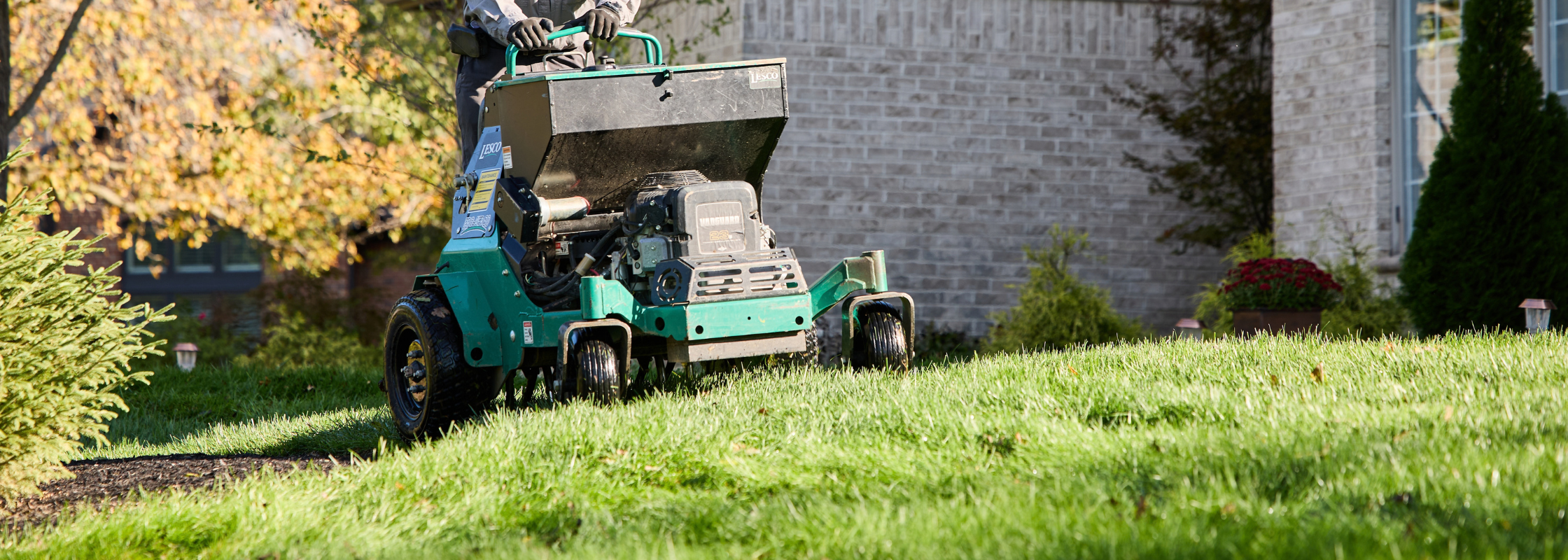
The first step is core aeration, which creates the ideal seedbed for newly applied grass seed. Ziehler pulls plugs from the soil, opening up space for new seed to reach the soil, germinate, and begin spreading its roots.
2. Liquid Lawn Aeration:
Next, Ziehler applies Liquid Lawn Aeration to help improve air, water, and nutrient absorption throughout the soil.
3. Overseeding
Ziehler applies a custom-blended Tall Fescue designed to help establish a thick, green lawn. Overseeding adds new grass to an existing lawn, helping fill in thin areas and preventing future weeds.
Tall Fescue is also a good fit for Ohio lawns because of its drought tolerance and ability to handle a variety of growing conditions.
4. Hand Treat Bare Spots
Areas that have been heavily worn or are completely bare often need some extra attention.
Ziehler’s process includes Bare Spot Hand Work, where these areas are hand-tilled and treated before seed is applied.
5. Starter Fertilizer
New seedlings need nutrients as they begin developing roots and growing.
The final step in Ziehler’s process is applying starter fertilizer with key macro and micronutrients to support feeding, rooting, and photosynthesis.
Why Is Fall the Best Time for Aeration & Overseeding in Ohio?
In Dayton, Cincinnati, and Columbus, autumn is the prime window to aerate and overseed cool-season grass.
Warm late-summer soil encourages rapid seed germination, while cool autumn air is much gentler on tender young grass blades than midsummer heat. Establishing new grass in the fall gives the root system months to develop before facing next summer's heat and drought, which is why Ziehler offers Aeration & Overseeding exclusively in the fall.
Once seed is applied, consistent watering is essential. We provide week-by-week, weather-tailored watering instructions to help you keep new seed properly moist while it takes root.
Frequently Asked Questions About Aeration & Overseeding
When is the best time to aerate and overseed a lawn in Ohio?
Fall is the best time to aerate and overseed in Dayton, Cincinnati, and Columbus. The combination of warm soil temperatures and cooler air creates optimal seed germination conditions without the drought stress of summer.
Why is Tall Fescue recommended for Ohio lawns?
Tall Fescue features superior drought tolerance, deep rooting capability, and high resilience against heavy foot traffic, making it one of the best cool-season grass choices for Ohio's variable climate.
How long does it take to see results after aeration and overseeding?
Grass seed typically begins germinating within 10 to 21 days with proper watering. While full lawn density develops over the following spring growing season, noticeable thickening occurs within weeks of germination.
What Is the Long-Term Goal of Aeration & Overseeding?
Aeration and overseeding won't transform a lawn overnight, but properly preparing the soil and giving quality seed the right conditions yields long-term results.
This process improves overall lawn density, fills thin and bare patches, encourages deeper root growth, improves soil water retention, and sets a strong foundation for a lush, green yard next spring.
Learn more about Ziehler’s Aeration & Overseeding service and reserve your spot for this fall.